2006年VOA标准英语-World Bank Proposes Carbon Trading to Save Rain
搜索关注在线英语听力室公众号:tingroom,领取免费英语资料大礼包。
(单词翻译)
By David McAlary
Washington
30 October 2006
The World Bank says rapidly diminishing tropical forests could be saved if farmers and loggers were paid not to cut the trees. It proposes to extend the current international system of carbon trading for this purpose because it says the trees are worth much more to the world standing1.
-------
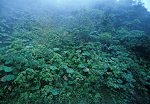 Costa Rica rainforest |
||
A new World Bank report says burning and rotting wood after deforestation releases one-fifth of Earth's annual emissions3 of carbon dioxide, twice the amount from all motor vehicles.
"So It's a major contributor to global warming, a major threat to global biodiversity, and there are a host of local environmental damages - health threatening smog, stream polluting sediment4, and the like," says Kenneth Chomitz, who wrote the World Bank report, a series of recommendations to slow deforestation. "There is now a chance on the policy horizon to mobilize new incentives5 to conserve6 forests, to keep forests standing."
The World Bank's main recommendation is to use the world's carbon market to reduce rain forest loss. At present, the market operates to reduce carbon emissions from industry and other sources. Nations and companies that emit more carbon than a predetermined limit buy credits from projects that reduce emissions.
The International Emissions Trading Association says the global carbon market has grown very rapidly and is worth $22 billion, twice its 2005 value.
But the concept is not yet used to preserve forests, as World Bank chief economist7 Francois Bourguignon points out.
"Today, it is possible to obtain carbon funds for forestation," he said. "Now, the paradox8 is that when you cut the forests, you are not penalized9 for doing that and you are not getting any money when you keep the trees standing."
The World Bank proposes to change that to benefit the 800 million people who depend on tropical forests for their livelihood10. Kenneth Chomitz says it makes no sense for a farmer to cut a hectare of rainforest to create a pasture worth $300 when the cleared trees release $7,500 worth of carbon based on an approximate current market value of $1,500 a ton.
If tropical forest preservation11 were included in the carbon trading scheme, the farmer could receive the $7,500 from polluters and earn 25 times the agricultural value of the pasture.
"Wouldn't it be great if we could get the farmer and the industrialist12 or utility owner sitting at the same table, figuring out how they can split the difference and make themselves both better off," said Chomitz.
But Chomitz says a carbon financing system could set off a disruptive race for property rights, a race that would favor the wealthy. So his report recommends that developing nations assign ownership and land use rights equitably13 in a manner that can be monitored publicly.
At the Ford14 Foundation, a U.S. philanthropy, environment and development official David Kaimowitz praises the World Bank report, but says it ignores some strategies that would improve the livelihoods15 of forest dwellers16.
These include the need for governments to make rainforest safer by reasserting their domain17 and clearing them of bandits and drug dealers18. Kaimowitz also says the bank should devote more attention to helping19 those who depend on or near forests develop small businesses.
"One of the three main pillars of the 2004 World Bank forestry20 strategy is precisely21 to harness forest resources to reduce rural poverty," he said."But if we look at the bank's current portfolio22, the reality is there is a surprisingly few number of projects that are, in fact, focused on using forest resources to reduce rural poverty."
But Kaimowitz calls the World Bank's carbon trading scheme and other forest-saving proposals useful and says he hopes they actually guide its strategies.
 收听单词发音


