2007年VOA标准英语-Simulated Asian Garden Tour on Exhibit in DC
搜索关注在线英语听力室公众号:tingroom,领取免费英语资料大礼包。
(单词翻译)
By Tabinda NaeemWashington
17 April 2007
Visitors to The Smithsonian Museum's Arthur M. Sackler Gallery in Washington, D.C. are experiencing the beauty and splendor1 of Asian gardens without taking a step outside. The exhibit, called "East of Eden: Gardens in Asian Art," features dozens of artworks depicting2 centuries of gardens in Asia. For Urdu TV's Tabinda Naeem, VOA's Jim Bertel has more on the rich imagery of the collection.
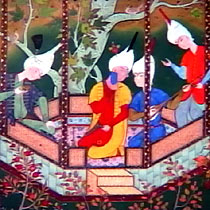 |
| East of Eden exhibit |
Matssumeh Garhad is the exhibit's chief curator. "It really covers a vast area and a vast time period,” she tells us. “But also in terms of geography it covers basically from Iraq to Japan. So, again, it really covers most of Asia. And the idea was to give a sense of how gardens were represented in these different areas, what elements they had in common and what set them apart."
More than 60 pieces of art spanning nearly a millennium6 are incorporated into the exhibit including scrolls7, folding screens, manuscript paintings, ceramics8 and textiles.
Artist Tom Bower9 of the Smithsonian Institution says many of the most popular pieces in the collection were created during the 300-year reign10 of the Mughals in northern India.
"They were a group of individuals that came from what was then known as Persia and moved into northern India and the general area of India and when the rulers came in they also brought their artists with them and created many beautiful things. The Taj Mahal is probably the ultimate magnificent item. But they created many books as you can see here," Bower points out.
Unlike western artists who usually sign their work, most of the Moghal artwork on display bears no names. Instead, curators like Farhad are more likely to know for whom the piece was created.
"We can guess on the basis of style where they were made, whether it was made in Lahore (Pakistan), or whether it was made in Delhi (India), whether it was made in Heart (Afghanistan) based on stylistic characteristics,” Farhad explains. “But, in many instances, we just don't know. In many instances these paintings were part of a manuscript so they went together with the illumination, with the calligraphy11, with the binding12. So it really was a collective work.”
 收听单词发音


