标准美语发音的13个秘诀 CD 3 Track 3
搜索关注在线英语听力室公众号:tingroom,领取免费英语资料大礼包。
(单词翻译)
Exercise 2-15: Colloquial1 Reductions and Liaisons2 CD 3 Track 3
In order for you to recognize these sounds when used by native speakers, they are presented here, but I don't recommend that you go out of your way touse them yourself. If, at some point, they come quite naturally of their own accord in casual conversation, you don't need toresist, but please don't force yourself to talk this way. Repeat.
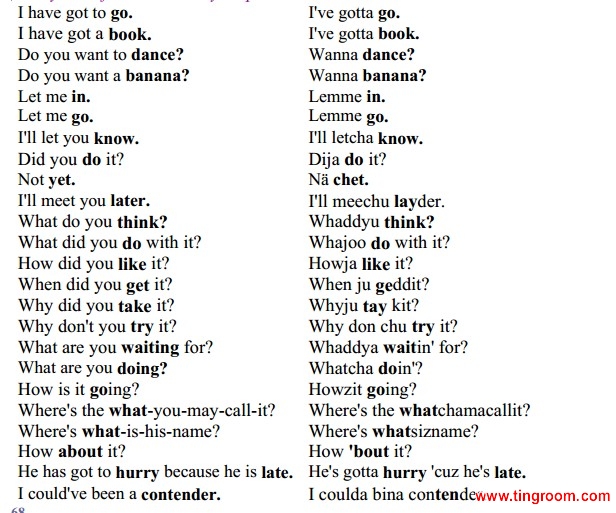
图片1
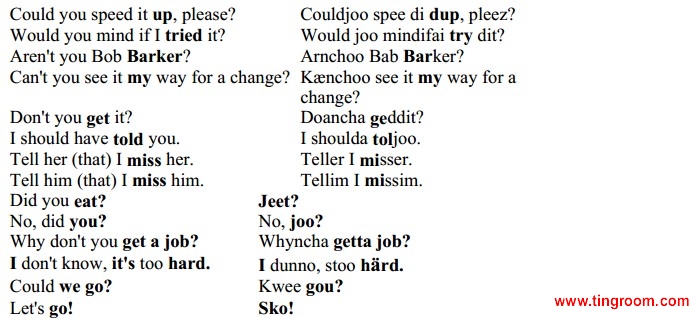
图片2
Spoon or Sboon?
An interesting thing about liaisons is that so much of it has to do withwhether a consonant3 is voiced or not. The key thing to remember is that the vocal4 cords don't like switching around at the midpoint. If the first consonant is voiced, the next one will be as well. If the first one is unvoiced, the second one will sound unvoiced, no matter what you do. For example, say the word spoon. Now, say the word sboon. Hear how they sound the same? This is why I'd like you to always convert the preposition to to də when you're speaking English, no matter what comes before it. In the beginning, to get you used to the concept, we made a distinction between tə and də, but now that your schwa isin place, use a single d' sound everywhere, except at the very beginning of a sentence.

图片1
 收听单词发音


