2006年VOA标准英语-UN Investigating Ivory Coast Waste Spill
搜索关注在线英语听力室公众号:tingroom,领取免费英语资料大礼包。
(单词翻译)
By Lisa Schlein
Geneva
12 September 2006
United Nations disaster-management experts have gone to Ivory Coast to help with the investigation1 of a toxic2 waste dumping incident that has left at least six people dead and thousands ill.
-----
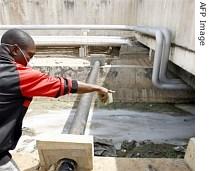 A man points to an open drain where toxic waste was dumped, in an industrial zone of Abidjan |
||
The team includes health experts and chemical experts who will try to see what substances are present in the waste that was dumped from a cargo5 ship at least two weeks ago.
A spokesman for the UN Environment Program, Michael Williams, says there is a lot of speculation6 about the deadly dumping incident, but no concrete answers.
"There are many actors involved," he said. "You have a broker7 in the Netherlands. You have various exporters and companies - the ship owner, the crew, the local company. So, it is a large cast of characters. The ship was in more than one port of call. It is a very chaotic8 situation right now, politically, in the country. And, there is this whole issue of the residue9 with claims that this hazardous waste came from the normal residue, which again is permissible10 because it is inevitable11. You have to have these toxic residues12. But, of course, they have to be safely managed."
Williams says dumping hazardous waste is banned under the Basel Convention and disposing of a ship's residue in a dangerous manner is prohibited under International Maritime13 Organization law.
"With the growth in global trade and the rising price of managing and disposing of hazardous waste, there are obviously growing opportunities and incentives14 for illegal trade," he added. "So, this sort of event in Abidjan can easily happen again."
Williams says this kind of illegal dumping goes on all the time in African countries. It just does not usually get any attention.
He says the investigation will probably come up with some answers in the next couple of weeks. He says a trust fund set up under the Basel Convention will compensate15 victims and pay for their long-term rehabilitation16.
Ivorian officials last week said around 1,500 Abidjan residents had sought treatment mainly for respiratory and digestive problems believed to be linked to the dumping. Health workers say that figure has now topped 2,000.


