2007年VOA标准英语-Nepal's Peace Process Slowed by Caution, Mistru
搜索关注在线英语听力室公众号:tingroom,领取免费英语资料大礼包。
(单词翻译)
By Anjana PasrichaNew Delhi
03 March 2007
Nepal's government and former Maoist rebels have begun negotiations1 to induct the guerrillas in an interim2 administration. Anjana Pasricha has this report from New Delhi on how Nepal's peace process is faring.
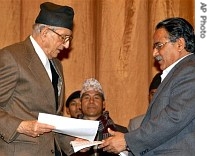 |
| PM Girija Prasad Koirala, left, and Maoist rebel leader Prachanda exchange signed peace accords in Katmandu, 21 Nov 2006 |
The rebels were expected to be inducted into a transitional government soon after they were sworn in as lawmakers in January.
But the process has been delayed. Political analysts3 say there is concern that the rebels have not fulfilled all the commitments they made during peace negotiations.
The negotiations led the Maoists to abandon their decade-long insurgency4 and join the political mainstream5. As part of the deal, Maoist combatants have been housed in camps under United Nations supervision6, and the weapons they surrendered have been locked in metal containers.
The United Nations says the Maoists have surrendered approximately 3,500 weapons, and have registered about 31,000 combatants.
But the head of Kathmandu's Samay magazine, Yuvaraj Ghimire, says there are worries that the number of arms placed by the rebels under U.N. supervision is too small.
'When Maoist arms were registered by the United Nations team, the general impression here is it a gross understatement of the number of arms which they possess," he said. "There is a fear that if Maoists will have arms which they have not registered, that will pose a threat to other political rivals and people who don't conform to what they want."
Political observers say there are also concerns that the rebels have not yet returned all the land they had seized during their insurgency.
For their part, the rebels are unhappy with their slow integration7 into the transitional administration. The administration is to conduct elections by June to choose a special assembly, which will then write a new constitution for the country.
Last month, Maoist chief Prachanda accused the government of seeking to delay elections, and said this could hurt the peace process.
Meanwhile, the government earlier this week appointed a committee to look at ways to nationalize the land and property of King Gyanendra and other members of the royal family.
The man appointed to head the committee is Gopal Man Shrestha.
Shreshta says the King will be asked to identify all his properties, and retain those he held prior to being crowned following his brother's death in 2001.
The king seized full political power in 2005, but a popular uprising against his rule last year forced him to reinstate parliament. The government later stripped him of all his powers, and the future of the monarchy8 will be decided9 when elections are held to write the new constitution.


