2007年VOA标准英语-Africa Tries Upgrade to E-Government
搜索关注在线英语听力室公众号:tingroom,领取免费英语资料大礼包。
(单词翻译)
By Naomi SchwarzOuagadougou, Burkina Faso
14 June 2007
African governments looking for ways to decrease corruption1 and improve the lives of their citizens are increasingly turning to the idea of e-government, the use computers and the Internet to exchange information and services directly with citizens, businesses, and other arms of government. Naomi Schwarz reports from a conference in Burkina Faso, where experts from African countries came to share some of the recent developments in the field.
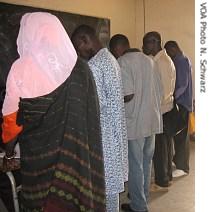 |
| Governments hope to reduce lines by putting services on the Internet |
"We should be able to improve our organizational effectiveness and then make the government more open and accountable and improve the service delivery, and in the end we hope to engage the citizen," he said.
Aziz, along with Nigeria's government, hopes to do this through what they call e-government. They want to use computers, telephones, and the Internet to automate3 government services that used to be done with people and on paper.
In the region around the capital, they have already started. They built a web site where citizens can go to look up information, send messages to the government, and apply for jobs.
"And also we have a contact center whereby people should telephone and leave their complaints," he added.
The complaints cover a wide range of issues. One that he says comes up frequently is from people who live in government-subsidized housing, where they pay a low rent over a period of years, at the end of which they will own the home. If they fail to make the payments, however, the government will put the house up for sale.
If someone in this situation thinks there was a mistake or wants to appeal to the government, they used to have to go in person and wait in line. Aziz says the line can sometimes take days.
Now they can call a special hotline or send a message over the web site, and someone will begin helping4 them immediately.
He says the call center gets around 200 calls per day, but he expects that number to increase as more people learn about the service.
Such e-government services are spreading around the continent. In Cape5 Verde, they have developed a program to tally6 votes and publicize up-to-the-minute results by computer and text messages, also called SMS.
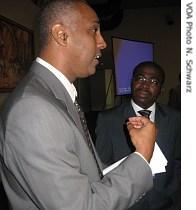 |
| Helio Varela |
Other countries in Africa are working to computerize their accounting7 services. In Burkina Faso, government ministries8 know exactly what money they have collected and which departments need to use it that day.
Cheick Diarra, chairman of Microsoft in Africa, which helped Burkina Faso develop their financial computer system, says these types of innovations would also help governments in Africa collect money they are owed.
"We are not so poor," he explained. "Maybe it is because the states usually do not have the ability to collect all the funds that are due to the state. Whether it is through the customs or tax system."
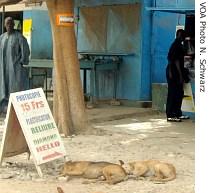 |
| Public kiosks offer telephone and Internet service |
Varela says this is why they are trying to make the high-tech services available over cell phones as well.
"We should not see e-government solutions just thinking about computers, this is not true," he noted11. "We must think about cyber places, and we must think about mobile. Because a mobile can give you the same kind of relationship that the Internet can give."
But in Africa's poorer countries, even a cell phone can be hard to come by.
Jacques Van Schalkwyk, general manager in Africa for Intel, an international company that manufactures computer chips, says it is important that governments do not focus solely12 on creating information and communication technology, what he calls ICT solutions for government.
"Any ICT development plan within a given country consists of multiple factors that need to be there," he explained. "You have got to have connectivity, you have got to have infrastructure13, you have got to have accessibility, so people have to get access to the devices. You have to have relevant content. You have got to educate people on how to use these devices effectively."
Intel has a program to distribute low-cost computers to African schools at under $200. Microsoft has another program, which it launched at the conference in Burkina Faso, to make low-cost refurbished computers more widely available. And other organizations, including the United Nations and African governments, are working to increase access to technology on the continent.
But these programs, like the e-government initiatives, are still in very early stages, and face many challenges, including a lack of electricity and low literacy rates.
 收听单词发音


