2007年VOA标准英语-UNHCR Says Countries Closing Doors to Refugees
搜索关注在线英语听力室公众号:tingroom,领取免费英语资料大礼包。
(单词翻译)
By Lisa SchleinGeneva
20 June 2007
In marking this year's observance of World Refugee Day, the U.N. refugee agency is warning more countries are closing their doors to refugees because of growing intolerance and a fear of terrorism. The agency says genuine asylum1 seekers are being turned away and refused a safe haven2 at a time when an increasing number of people are fleeing violence, persecution3 and oppression. Lisa Schlein reports for VOA from UNHCR headquarters in Geneva.
The U.N. refugee agency says a growing number of countries around the world are hardening their attitudes toward refugees and refusing to grant them asylum. This is mainly occurring in the industrialized world. But, is also becoming a problem in some developing countries.
UNHCR spokesman William Spindler says intolerance, xenophobia or fear of foreigners and racism4 is on the increase. He says many governments confuse asylum seekers, who are fleeing for their lives, with economic migrants, who are in search of a better future.
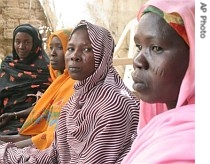 |
| Sudanese refugees (File photo) |
Spindler says countries in North America and Europe are under the false impression they are hosting huge numbers of refugees. He says the vast majority is in poor countries.
A new report shows the number of refugees rose by 14 percent last year to nearly 10 million. And, it finds 24.5 million people have been uprooted6 by conflict inside their own countries.
Despite this dismal7 picture, Spindler says there are pockets of hope. He says last year, more than 700,000 refugees returned home after years of living in exile. He says it is this message of hope High Commissioner8 Antonio Guterres wants to get across on this World Refugee Day.
"The reason why the High Commissioner is in south Sudan is to remind the world that despite the horrors of Darfur, the critical situation in Iraq, and displacement9 in many other parts of the world, there is still hope," Spindler said. "And, people are returning to countries that have been devastated10 by years of conflict."
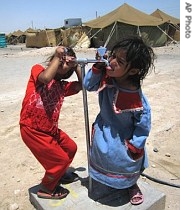
Iraqi children drink water from taps at a refugee camp for internally displaced people outside Najaf, Iraq, 16 June 2007
Refugee spokesman Spindler notes it is one thing to get the refugees home. It is quite another to keep them home. He says it is important that the international community support post-conflict reconstruction11 so these returns are sustainable and durable12.
He says it would be tragic13 to have a return to conflict and find that people, once again, are on the move.
 收听单词发音


