2007年VOA标准英语-Sikkim, India Tries to Balance Energy Developme
搜索关注在线英语听力室公众号:tingroom,领取免费英语资料大礼包。
(单词翻译)
By Steve HermanNew Delhi
28 June 2007
Energy-hungry India is looking to one of its most rugged1 and scenic2 regions to generate badly needed electricity. But plans to create a series of dams and hydroelectric plants along the Teesta River in Sikkim and West Bengal are running into opposition3 over concerns the construction will destroy natural habitats and endanger already vanishing local cultures. VOA's Steve Herman reports from New Delhi.
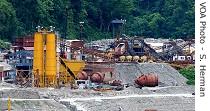 |
| Hydroelectric plant in West Bengal along the Teesta River, just to the south of the Sikkim border |
Young Buddhist5 monks6 chant inside the Enchey Monastery7 overlooking Sikkim's capital of Gangtok.
Those ethereal sounds are part of the allure8 for tourists who make it to the remote Indian state surrounded by West Bengal, Nepal, Bhutan and Tibet. Sikkim also is known for its pristine9 environment, and officials tout10 the state as India's premier11 eco-tourism destination.
But many Sikkimese believe their unique blend of cultures and fragile environment are in peril12. Unregulated mining and deforestation have triggered an increasing number of landslides13, damaging farmland and, at times, paralyzing transportation and communications.
Activists14 say the biggest threat comes from dozens of hydroelectric projects planned or under construction along the Teesta River.
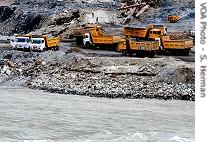 |
| Construction along Teesta river |
Experts project the mighty17 Teesta and other rivers in India's northeast could generate 60,000 megawatts of power - double the country's current hydroelectric output.
K. Ramanathan of The Energy and Resources Institute, says hydropower plants are more expensive to build than other plants. But he explains that long-term, hydroelectric plants are cheaper and cleaner than oil or coal plants.
Ramanathan says the key is getting the river states to welcome such massive dam projects.
"We are already providing 12 percent of free power (from such projects) for the home state to incentivize them to develop this energy and partly as a royalty18 and partly to take care of the local peoples' concerns," Ramanathan noted19.
But many in Sikkim, which India forcibly annexed20 in 1975, feel there is more to lose than gain. They note dam construction elsewhere in India has displaced communities, destroyed natural habitats and fouled21 aquatic22 eco-systems.
Dam opponents worry that parts of the Kangchenjunga National Park and a biosphere23 reserve will be bulldozed to make way for a hydroelectric plant in northern Sikkim.
Ramanathan says the government must address people's concerns before construction begins.
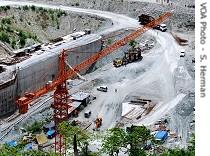 |
| Hydroelectric plant construction in West Bengal |
Sikkim's original inhabitants, the Lepchas, are particularly concerned about the projects. Although this rural group of about 30,000 people has little history of political activism, some Lepchas feel compelled to take action.
Dawa Tshering Lepcha is one of several members of the group now on a hunger strike. He thinks the strike will lead to a mass movement to halt dam construction.
 |
| Dawa Tshering |
Blasting and tunneling are reported to have damaged some of the group's homes. Lepcha says the tribe most fears it will be forced to leave an area to which it has a deep spiritual connection.
"We are Buddhists24 now, but we still do follow our own practice like nature worshipping," Lepcha noted. "We have our own priests and all that. So we worship these mountains, these rivers, these lakes, the trees. These projects are going to destroy whatever we worship."
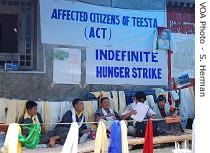 |
| Lepchas hunger strikers in Gangtok, Sikkim |
Up the hill from where the hunger strikers sit, the monks at the Enchey Monastery punctuate26 their chanting with a crescendo27 said to help awaken28 disciples29 from the slumber30 of ignorance.
Many in Sikkim hope that government officials and residents will gain enlightenment and be able to balance India's energy demands with preservation31 of the environment and its inhabitants.
 收听单词发音


