2007年VOA标准英语-Cambodia Puts Khmer Rouge Reign of Terror on Tr
搜索关注在线英语听力室公众号:tingroom,领取免费英语资料大礼包。
(单词翻译)
By Rory ByrnePhnom Penh
15 August 2007
Thirty years after the brutal3 Khmer Rouge4 governed Cambodia, efforts to punish those considered most responsible for the deaths of nearly two million people have entered a new phase. A former leader of the ultra-Maoist group has just been charged with crimes against humanity while cases against four others are pending5. But as Rory Byrne reports from Phnom Penh, doubts remain whether the Khmer Rouge tribunals will deliver justice.
killings2 from 1975-1979" hspace="2" src="http://www.tingroom.com/upimg/allimg/070817/1604210.jpg" width="210" vspace="2" border="0" />
Evidence of killings from 1975-1979
A monument outside Phnom Penh shows some of the enormous scale of the killing1 in Cambodia from 1975 to 1979. Almost two million people, a quarter of the populations, died under the Khmer Rouge from overwork, starvation and execution.
The ultra-Maoist group wanted to create a rural socialist6 utopia. It executed political opponents, the educated and ethnic7 minorities. Many died brutal deaths.
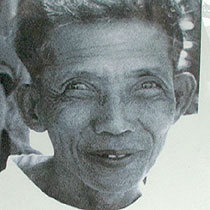 |
| Kaing Khek Iev, also known as Duch |
He is the first member of the Khmer Rouge to be indicted8 in connection to the regime's reign9 of terror.
Almost 30 years after the Khmer Rouge were ousted10 from power, a joint11 international and Cambodian court is preparing to try those accused of being most responsible for the deaths.
Five former leaders are scheduled to be tried at a new court outside Phnom Penh, although more may follow later.
Civic12 groups warn that because Cambodia's judiciary is weak, the tribunal may be subject to political interference.
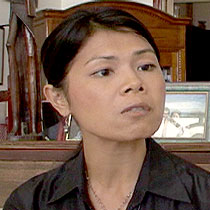 |
| Theary Seng, director of Cambodia's Center for Social Development |
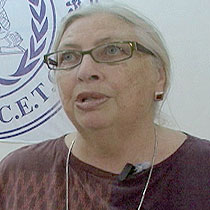 |
| Helen Jarvis |
Civic groups see the tribunal as part of a wider process aimed at helping13 the country come to terms with its traumatic past.
Lawyer Theary Seng says, "The core benefits of a trial are becoming the ancillary14 benefits and the side benefits of outreach, engaging the Cambodian people, of disseminating15 information, of talking about history, of human rights abuses, of rule of law -- those issues are now becoming the core values of having this tribunal."
This annual re-creation of Khmer Rouge atrocities16 aims to help Cambodians remember the past and to heal the wounds of that era. Rights activists17 hope the Khmer Rouge tribunal will play another part of that healing process.
 收听单词发音


