VOA标准英语10月-Rice: US-India Nuclear Deal to be Signed Soon
搜索关注在线英语听力室公众号:tingroom,领取免费英语资料大礼包。
(单词翻译)
U.S. Secretary of State, Condoleezza Rice, on a visit to India, says a landmark1 civil nuclear agreement between the United States and India will be concluded soon. However the two countries did not sign the deal during her visit. As Anjana Pasricha reports, the deal will overturn a three-decade ban on civil nuclear trade with India.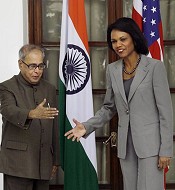 |
| US Secretary of State Condoleezza Rice shakes hands with Indian Foreign Minister Pranab Mukherjee in New Delhi, 04 Oct 2008 |
Secretary Rice said in New Delhi Saturday that the civil nuclear agreement between the two countries will be signed into law "very soon" by President Bush.
The landmark deal received the approval of the U.S. Congress recently, paving the way for the two countries to finalize2 the agreement, and open up civil nuclear trade between them.
The pact3 was expected to be signed by the two countries during Secretary Rice's visit to the Indian capital, but that did not happen.
Secretary Rice says administrative4 details remain to be resolved before the signing. But she called it "a done deal."
"It is a matter of signing that agreement, and so I don't anyone to think that we have open issues. We in fact don't have open issues. These are administrative matters of signing agreements," he said.
After holding talks with her Indian counterpart, Pranab Mukherjee, Secretary Rice said the deal gives a new platform for cooperation in energy matters between the two countries.
The nuclear deal will allow American companies to sell nuclear fuel, reactors5 and technology to India.
She also expressed optimism about future friendship between the two countries, saying the United States enjoys one of the "broadest relations" with India. She said the nuclear deal will trigger an expansion of their ties.
Indian Foreign Minister Pranab Mukherjee expressed satisfaction with the agreement, saying it will help the country's quest for development.
"It is this agreement which has opened the door for India for international nuclear commerce. What India and the United States are doing today has direct benefits to our people, and assist India's efforts to develop," he said.
India and the United States first announced their intention to pursue nuclear cooperation in 2005. The pact went ahead despite strong political opposition6 in India. Communist parties and the main opposition Bharatiya Janata Party say it will bring the country's foreign policy too much under American influence.
India was banned from civil nuclear trade since 1974, when it first conducted nuclear tests. New Delhi has not signed the Nuclear Non Proliferation Treaty. Critics of the deal say giving India access to nuclear technology will undermine efforts to control the spread of nuclear weapons.


