VOA标准英语10月-Doctors Warn of Increase in Cholera Cases in Zimb
搜索关注在线英语听力室公众号:tingroom,领取免费英语资料大礼包。
(单词翻译)
People in some parts of Zimbabwe's capital city Harare are being forced to dig holes in the ground for water as the city's water delivery system continues to break down. As a result, doctors warn that recent outbreaks of cholera1 could worsen as the rainy season looms2. Tendai Maphosa reports for VOA from Harare.Dozens of people have died of cholera in various parts of Zimbabwe recently. But health officials warned that the combination of burst sewer3 pipes, which are a regular feature in some of Harare's low-income suburbs, and the rains could make matters much worse.
Dr. Douglas Gwatidzo is the chairman of Zimbabwe Association of Doctors for Human Rights and blames the cholera outbreak on people drinking unsafe water.
He said,"We have places where people have resorted to digging wells and the shallow wells are not very far from the drains that are full of sewage obviously those places are going to be flooded so there is going to be cross contamination from the drainage system and then the wells so it means all the open wells are going to be heavily contaminated."
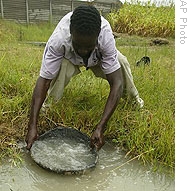 |
| Martin Mhizha fetches water from an unprotected water source in Epworth, Zimbabwe, (file photo) |
While the problem is normally associated with people living in rural areas where there is no running water, it's very much an urban problem here. The dormitory suburb of Chitungwiza, a mere4 30 kilometers from Harare and Chinhoyi, a town some 116 kilometers from the capital, have both witnessed outbreaks recently resulting in the death of an estimated 30 people.
The water delivery system in Harare has been erratic5 for years now. VOA visited one of the worst hit parts of the city and spoke6 to this resident.
She said, "We have almost nine months without any water. Other areas they have got two years without water from their water taps."
For water to drink and domestic use, she and the other residents have resorted to digging holes in the ground. They also do their laundry close to the hole which is near a stream sewage spillage.
She added, "There are some insects as you can see, mosquitoes breed in here and then we take the water to go and drink."
The residents of this area said they boil their water and use water purifying tablets to minimize the chances of catching7 diseases. But it does not always work as they have had cholera outbreaks in the past.
While those in the poorer areas are the most exposed, Dr. Gwatidzo said, even those with uninterrupted or irregular supplies of water are at risk. Harare drinking water is just not safe, he said, and the rains will increase the chances of those who drink it catching some bug8.
He said, "Unless by some miracle we manage to lay our hands on large quantities to treat our water, I think the onset9 of the rains spells doom10 for the population of Harare and other towns."
The Zimbabwe National Water Authority is tasked with bringing clean and safe to drink water to the people. It puts down the water woes11 to breakdowns12 at water purifying plants, a lack of foreign currency to replace old equipment and to buy adequate water purification chemicals.
The Deputy Minister of Water and Infrastructural13 Development Walter Mzembi attacked donors14 and multilateral agencies who have apparently15 promised to support the delivery of water only after a power-sharing government is in place.
He is quoted in the government mouthpiece The Herald16 as saying water is a basic right and the donors should not play politics with it.


