VOA标准英语10月-d Cross: Millions of Iraqis at Risk From Polluted
搜索关注在线英语听力室公众号:tingroom,领取免费英语资料大礼包。
(单词翻译)
The International Committee of the Red Cross warns millions of Iraqis are at risk of disease from polluted water and inadequate1 health care. It says the situation of inadequate health care, water and sanitation2 services is particularly bad in the Iraqi countryside. Lisa Schlein reports for VOA from ICRC headquarters in Geneva.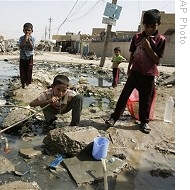 |
| International Committee of Red Cross says situation of inadequate health care, water and sanitation services particularly bad in Iraqi countryside |
The International Committee of the Red Cross says security and the provision of essential services have somewhat improved in recent months. But, it says decades of conflict and war in Iraq have taken a heavy toll3 in terms of crumbling4 infrastructure5 and chronic6 shortages in basic supplies and services.
The Red Cross says it is particularly concerned about the millions of households that are not connected to a water network. ICRC spokeswoman, Dorothea Krimitsas tells VOA about 40 percent of the population, mainly in the countryside and suburbs, lacks access to clean, piped in water.
"Those who cannot buy water, which is at an average cost of 50 U.S. cents for about 10 liters, those who cannot afford that have to collect water from rivers and wells," she said. "These rivers and wells are very often polluted either by household waste, untreated sewage that goes directly to the rivers and other kinds of pollutions from everywhere… All these things are creating a situation that puts millions of Iraqis at risk today."
Krimitsas says many people are afflicted7 with water-borne diseases. Unfortunately, she says many are unable to get the treatment they need because hospitals are overstretched.
"They have to struggle with chronic shortages of medical supplies and also of equipment," she said. "The dilapidated medical facilities, sometimes also outdated8 medical facilities do not have proper maintenance and sanitation. Electricity shortages are still common all over the country. And, on top of that specialists are not always available."
The International Committee of the Red Cross is expanding its water, sanitation and health care programs in Iraq. The organization also is delivering drugs and surgical9 dressing10 materials to hospitals.
But, Krimitsas notes humanitarian11 assistance alone cannot solve the country's vast problems. She says that will only be possible when civilians12 who are targeted or killed and injured on a daily basis can live in a safe and better environment.
 收听单词发音


